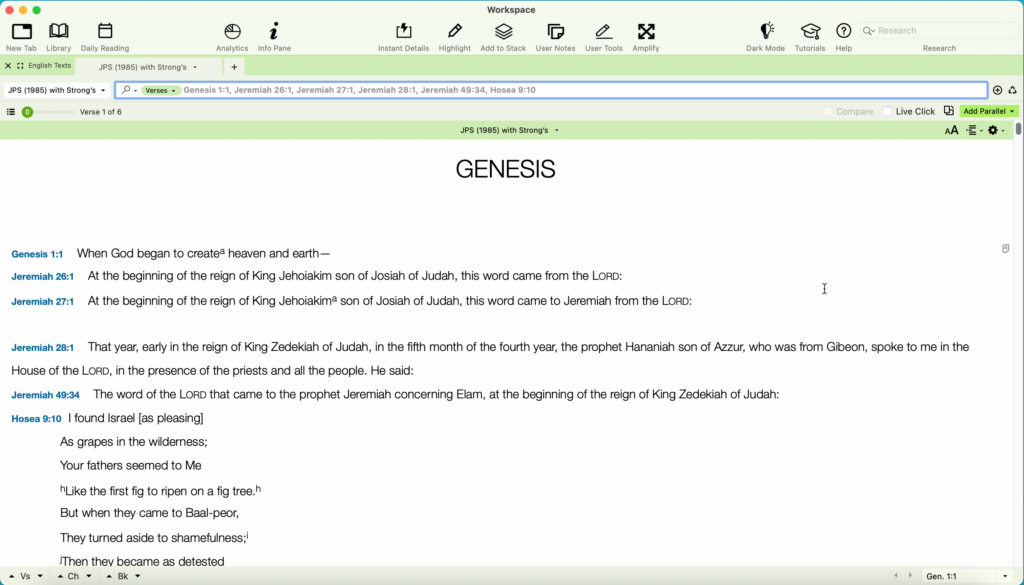
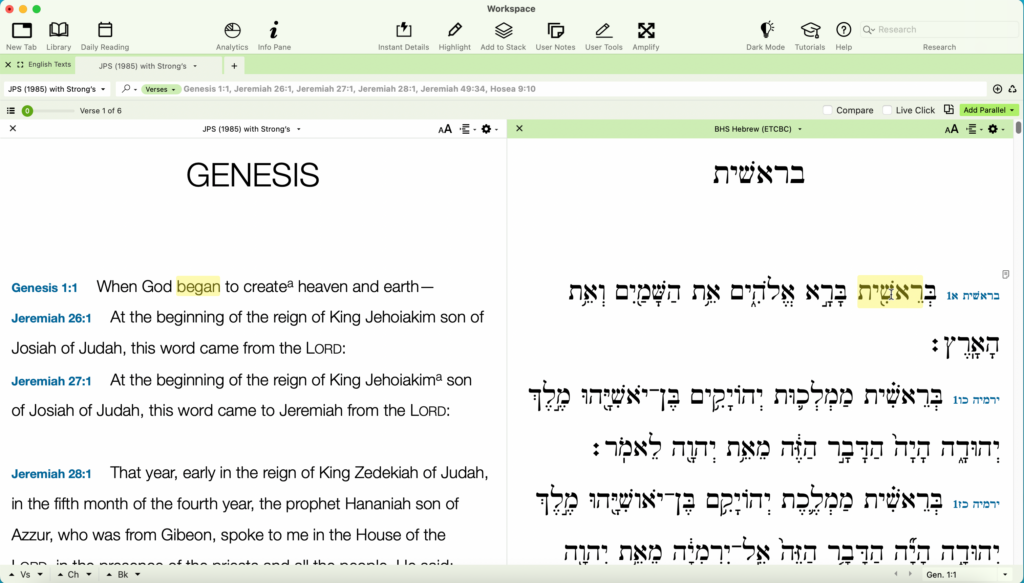
Σόλων γάρ που εἶπε—γηράσκω δʼ αἰεὶ πολλὰ διδασκόμενος
Plato, “Platonis Opera, Ed. John Burnet” (Medford, MA: Oxford University Press, 1903).
Γηράσκω δ’ αἰεὶ πολλὰ διδασκόμενος
Solon on Growing Old as a Learner
Σόλων γάρ που εἶπε— γηράσκω δʼ αἰεὶ πολλὰ διδασκόμενος.
Solōn gar pou eipe— gēraskō d’ aiei polla didaskomenos.
“For Solon, I believe, said: I grow old, always learning many things.”
There are Greek sentences that seem almost designed to survive their original circumstances. γηράσκω δʼ αἰεὶ πολλὰ διδασκόμενος is one of them.
It is often encountered today in the abbreviated form γηράσκω ἀεὶ διδασκόμενος, “I grow old always learning,” and it is sometimes casually attributed to Socrates. But the line is considerably older than Socrates. It belongs to Solon of Athens, the archaic poet, statesman, and lawgiver, and is conventionally numbered Solon fr. 18 West.1
The wording quoted above appears at Rival Lovers (Erastai, Latin Amatores) 133c, a Socratic dialogue transmitted among Plato’s works:
Σόλων γάρ που εἶπε—γηράσκω δʼ αἰεὶ πολλὰ διδασκόμενος.
The dialogue’s Platonic authorship has been disputed both in antiquity and modern scholarship, so its safest description is as a work of disputed Platonic authenticity.2 What matters for our present purpose is that its author expects the reader to recognize Solon’s line as an authoritative saying about education and philosophy. (Internet Encyclopedia of Philosophy)
And when we slow down enough to read the Greek rather than merely repeat the proverb, the sentence becomes richer.
The Text
Greek
Σόλων γάρ που εἶπε—γηράσκω δʼ αἰεὶ πολλὰ διδασκόμενος.
Transliteration
Solōn gar pou eipe—gēraskō d’ aiei polla didaskomenos.
Literal Translation
“For Solon, I think, said: ‘I grow old, always being taught many things.’”
Idiomatic Translation
“For Solon, as I recall, said: ‘I grow old, always learning many things.’”
That difference between “learning” and “being taught” will become important.
Parsing and Vocabulary
Greek
Parsing
Vocabulary / Function
Σόλων
nominative masculine singular, proper noun
Solon
γάρ
postpositive conjunction
for, indeed
που
enclitic indefinite adverb
somewhere; perhaps; I suppose; as I recall
εἶπε
3rd singular aorist active indicative of λέγω
he said
γηράσκω
1st singular present active indicative of γηράσκω
I grow old, I am growing older
δʼ
elided δέ, postpositive conjunction
and, but, while; connective with preceding context
αἰεί
adverb
always, ever, continually
πολλά
accusative neuter plural of πολύς
many things
διδασκόμενος
present middle/passive participle, nominative masculine singular of διδάσκω
being taught; hence, learning
The Introductory Words: Σόλων γάρ που εἶπε
Before reaching Solon’s poetry, the prose introduction deserves a glance:
Σόλων γάρ που εἶπε
Literally:
“For Solon somewhere said….”
The enclitic που is deliberately indefinite. It can mean “somewhere,” but in a recollective expression like this it has much the same effect as English:
“Solon, I think, said….”
“Solon says somewhere….”
“As I recall, Solon said….”
The speaker is citing a well-known saying from memory rather than providing a scholarly reference.
There is something rather charming about that. Solon’s verse has already become memorable enough to function almost proverbially.
γηράσκω: Not “I Am Old,” but “I Am Growing Old”
The main verb is:
γηράσκω
from γηράσκω, “to grow old.”
This is the first-person singular present indicative:
“I am growing old.”
That is more significant than it may first appear.
Solon does not say:
γέρων εἰμί “I am an old man.”
Nor does he describe aging as a completed event.
Instead, γηράσκω presents aging as a process.
He is becoming older.
And while that process is taking place, another process is occurring simultaneously:
διδασκόμενος “being taught,” “learning.”
The syntax therefore holds aging and learning together:
γηράσκω … διδασκόμενος
“I grow old … while learning.”
Old age is not the moment at which education has ended. Learning accompanies the very process of aging.
δʼ: One Tiny Word—and a Lost Poem
An easily overlooked feature of the verse is the little δʼ, the elided form of δέ:
γηράσκω δʼ αἰεὶ…
We might translate it “and,” “but,” or sometimes leave it untranslated.
But philologically it tells us something important.
δέ is postpositive and connective. It normally links what we are hearing with something that came before.
That means the famous sentence was not originally floating by itself as an inspirational maxim. It belonged to a larger poem and responded in some way to a preceding thought.
That preceding context is lost.
The line survives because other ancient authors quoted it. A later Greek proverb collection, conventionally associated with Zenobius, explicitly remarks that the saying was “drawn from the elegies of Solon”—ἐκ τῶν Σόλωνος ἐλεγείων.3 (Wikisource)
So one of the most famous declarations of lifelong learning in Western literature comes to us without the sentence to which its δέ once replied.
There is something appropriately Solonian about that too: even the reader has more to learn.
αἰεί: “Always”
Then comes the word that has made the verse proverbial:
αἰεί
“always,” “ever,” “continually.”
The point is not merely that an old person can learn. Solon describes learning as a continuing condition of life.
But the familiar shortened quotation—
γηράσκω ἀεὶ διδασκόμενος
“I grow old always learning”
—leaves out a word.
And that missing word matters.
πολλά: “Many Things”
The actual Solonian verse reads:
γηράσκω δʼ αἰεὶ πολλὰ διδασκόμενος
not simply:
γηράσκω ἀεὶ διδασκόμενος.
Solon is not merely “always learning.”
He is learning:
πολλά “many things.”
The neuter plural of πολύς is functioning substantivally: “many [things].”
Grammatically there is an additional refinement. Active διδάσκω can take both a person taught and a thing taught:
διδάσκω τινά τι “I teach someone something.”
When the person becomes the subject of a passive construction, the thing taught can remain in the accusative. Thus:
πολλὰ διδασκόμενος
is very literally:
“being taught many things.”
So πολλά is best understood as a retained accusative of the thing taught.
The familiar English “learning many things” is idiomatic and perfectly sensible, but the grammatical structure of the Greek remains worth hearing.
διδασκόμενος: Learning or Being Taught?
This is perhaps the most interesting word in the sentence.
διδασκόμενος is the present middle/passive participle of:
διδάσκω “to teach.”
It agrees with the unexpressed subject “I” of γηράσκω:
[ἐγώ] γηράσκω … διδασκόμενος
“I grow old … being taught.”
English naturally converts this into:
“I grow old learning.”
But something is lost in doing so.
The Greek does not use μανθάνω, the ordinary verb “to learn.” Instead, Solon represents himself grammatically as the recipient of teaching.
And ancient readers noticed the connection. In Rival Lovers 133c, immediately after quoting Solon’s διδασκόμενος, the speaker explains the maxim with the verb μανθάνειν, “to learn,” and concludes that the philosopher should continue learning throughout life. (Gadsden Classics)
The passive coloring of Solon’s original expression nevertheless remains suggestive.
He grows older by allowing himself still to be taught.
Experience may teach him.
Other people may teach him.
Political success may teach him.
Political failure may teach him.
Travel may teach him.
His own mistakes may teach him.
Age, in other words, does not make him merely an authority from whom others must learn. The old man remains capable of occupying the learner’s place.
That is a considerably more demanding conception of wisdom.
Syntax at a Glance
The basic structure of the verse is remarkably economical:
γηράσκω main finite verb: “I grow old”
διδασκόμενος circumstantial present participle agreeing with the subject: “while being taught / while learning”
αἰεί adverb emphasizing continuation: “always”
πολλά retained accusative of the things taught: “many things”
Expanded into more explicit English:
“As I continue growing older, I continue all the while to be taught many things.”
The present participle naturally denotes action simultaneous with the main verb.
Solon is not saying:
“First I learned many things, and afterward I became old.”
Nor:
“When I am finally old, I shall have learned.”
Instead:
I am aging and learning at the same time.
The grammar itself makes education coextensive with life.
A Metrical Note: This Is Poetry
The line is not merely a prose proverb. It is a surviving piece of archaic Greek elegiac poetry, conventionally printed as Solon fr. 18 West. A later ancient source explicitly identifies it as coming from Solon’s elegies. (Wikisource)
It is a dactylic pentameter, the second-line meter of the elegiac couplet.
The central break, or diaeresis, falls after αἰεί:
γηράσκω δʼ αἰεί ‖ πολλὰ διδασκόμενος
The first half is strikingly heavy, with spondaic movement:
γηράσκω δʼ αἰεί
while the second half moves in regular dactylic rhythm:
πολλὰ διδασκόμενος.
We should resist making meter carry more interpretation than it can bear. Still, to an attentive ear there is an attractive possibility: the weightier movement of “I grow old, always” gives way after the central break to the more mobile rhythm of “being taught many things.”
Age may be heavy.
Learning still moves.
Who Was Solon?
Solon belonged to Athens of the late seventh and early sixth centuries BCE, long before Socrates and Plato.
He was simultaneously a poet and political actor, a combination that can seem strange only if we impose modern professional categories on archaic Greece.
His archonship is traditionally dated to 594/593 BCE, when Athens was experiencing severe social and economic tensions. Ancient sources associate his legislation with measures against debt bondage and with the reforms later remembered under the name σεισάχθεια, the “shaking off of burdens.” The Athenian Constitution, for example, credits Solon with prohibiting loans secured on the debtor’s person and with measures concerning debts; the exact nature and development of the reform remain subjects of modern scholarly discussion.4 (Humanitext Reader)
Later Greek tradition also placed Solon among the Seven Sages.
But “lawgiver,” “statesman,” and “sage” can obscure another fact:
Solon was a major archaic poet.
His surviving fragments concern wealth, justice, political disorder, divine limits, civic responsibility, pleasure, mortality, and old age.
He did not merely legislate about Athens.
He thought about Athens—and human life—in verse.
The Irony of a Famous Fragment
We do not possess the poem from which γηράσκω δʼ αἰεὶ πολλὰ διδασκόμενος originally came.
We possess one line.
Its surrounding verses have disappeared.
This is important whenever we interpret a fragment of archaic poetry. The modern quotation can sound like a freestanding declaration of educational philosophy. In its original setting, however, it may have qualified, contrasted with, or responded to something in the lost preceding verse.
The surviving δέ is a grammatical scar left by that missing context.
Yet the line survived precisely because ancient readers kept quoting it.
That survival tells its own historical story.
Solon Becomes a Proverb
By later antiquity the line had acquired something close to proverbial status.
Plutarch, writing centuries after Solon, uses it while describing Solon’s supposed love of wisdom. In Life of Solon 2.2 he depicts Solon as a lover of wisdom who, even as an older man, continued “being taught many things.” Plutarch quotes the line again at Solon 31.3. (Magalia Wiki)
The proverb collection associated with Zenobius likewise records:
Γηράσκω δ᾿ αἰεὶ πολλὰ διδασκόμενος
and explains that the expression derives from Solon’s elegies. (Wikisource)
The line thus accomplished something remarkable.
A verse from an otherwise lost poem became detached from its poem, entered philosophical discourse, and eventually became proverbial wisdom.
What Rival Lovers Does with Solon
The context of the quotation at Rival Lovers 133c is especially revealing.
Socrates asks what it means to philosophize.
His interlocutor appeals to Solon:
Σόλων γάρ που εἶπε—γηράσκω δʼ αἰεὶ πολλὰ διδασκόμενος.
He then explains that anyone who intends to philosophize should continue learning both when young and when old, so that he may learn as many things as possible during life.
Socrates responds by asking whether philosophy is therefore:
πολυμαθία
“much learning,” “wide learning,” or “the possession of a great deal of knowledge.” (Gadsden Classics)
That question subtly complicates Solon’s maxim.
Is lifelong learning the same thing as accumulating the maximum possible number of facts?
Must a philosopher know a little about everything?
Does wisdom consist in quantity of information?
The dialogue will not permit the attractive proverb to answer these questions automatically.
And perhaps that is precisely what philosophical reading should do with a proverb: not destroy it, but interrogate it.
Plato’s Other Encounters with Solon’s Maxim
Solon’s line seems to have been sufficiently famous that it could be invoked elsewhere in the Platonic corpus.
In the Laches, Nicias praises the willingness to continue learning throughout life and explicitly appeals to Solon at 188b. Shortly afterward, Laches adapts the thought by saying that he is willing in old age to be taught many things—but only by good teachers.
The Republic provides an amusing counterpoint.
At Republic 536d, Socrates remarks that, for the particularly demanding educational program under discussion, one should not believe Solon that a person growing old can continue learning many things; some forms of strenuous study, he argues there, belong especially to youth. (Perseus Digital Library)
So the ancient reception of Solon’s sentence was never merely sentimental.
People quoted it.
Adapted it.
Qualified it.
And even contradicted it.
That may be the clearest evidence of how alive the verse remained.
Is This Really About “Lifelong Learning”?
It is tempting to translate Solon directly into modern educational language and declare him an early advocate of “lifelong learning.”
There is some truth in that comparison.
But the Greek says something both simpler and deeper.
Modern discussions of lifelong learning often emphasize professional development, retraining, new skills, qualifications, or intellectual productivity.
Solon says none of these things.
He simply places two continuing processes beside one another:
γηράσκω I grow older
and
διδασκόμενος I continue being taught.
That is not primarily a theory of education.
It is an attitude toward human limitation.
Growing Older Is Not the Same as Having Arrived
The line is especially powerful because Solon does not say:
“I have grown old, and therefore I am wise.”
Greek culture could certainly associate age with experience. The later proverb tradition itself explains Solon’s saying with reference to those who become more experienced through age. (Wikisource)
But Solon’s grammar refuses to turn age itself into an intellectual credential.
The older speaker remains:
διδασκόμενος
someone being taught.
That creates a useful distinction.
There is a difference between saying:
“I have lived a long time, therefore I know,”
and saying:
“I have lived a long time, therefore I have had a long time in which to discover how much there remains to learn.”
Solon’s verse belongs closer to the second.
Why πολλά Matters So Much
This is why the commonly abbreviated form of the quotation loses more than a single word.
γηράσκω ἀεὶ διδασκόμενος
“Always learning as I grow old”
is attractive.
But:
γηράσκω δʼ αἰεὶ πολλὰ διδασκόμενος
has greater breadth.
Many things.
Not one doctrine mastered once and for all.
Not one teacher.
Not one discipline.
Not one stage of education.
The plural opens outward.
A human lifetime keeps presenting material for instruction.
The world remains larger than the learner.
The Wisdom of the Participle
Perhaps the real philosophical center of the sentence is not γηράσκω at all.
Perhaps it is the participle.
διδασκόμενος.
Solon does not imagine maturity as a state in which one ceases to occupy the position of the pupil.
He grows older while still being taught.
That participle leaves the self unfinished.
And perhaps that is why the line has survived for roughly two and a half millennia.
There is no denial of aging here. The first word of the quotation is uncompromising:
γηράσκω.
I grow old.
But aging is immediately accompanied by another activity:
διδασκόμενος.
Being taught.
The body ages.
Experience accumulates.
Certainties are corrected.
Old explanations fail.
New people arrive with things to teach us.
Books once misunderstood become intelligible.
Books once thought understood become strange again.
Mistakes reveal themselves years later.
And the world refuses to become simple merely because we have spent more time in it.
So the line does not promise perpetual youth.
It proposes something better:
perpetual teachability.
One Last Translation
If I wanted to preserve not merely the dictionary meanings but something of the intellectual posture of Solon’s Greek, I might finally translate the line this way:
“I grow older, while still allowing myself always to be taught many things.”
That is less elegant than “I grow old always learning.”
But perhaps it is closer to the challenge.
The goal is not simply to keep collecting information.
It is to remain the kind of person whom reality can still teach.
γηράσκω δʼ αἰεὶ πολλὰ διδασκόμενος.
I grow old, always learning many things.
There are worse ways to grow old.
Notes
Bibliography
Blok, Josine, and Julia Krul. “Debt and Its Aftermath: The Near Eastern Background to Solon’s Seisachtheia.” Hesperia 86, no. 4 (2017): 607–643. (ASCSA)
Burnet, John, ed. Platonis Opera. Vol. 2, Tetralogias III–IV continens. Oxford: Clarendon Press, 1901. See Amatores133c. The Perseus catalog confirms that Amatores occupies pp. 132–139 of Burnet’s second volume. (Perseus Catalog)
Casella, Federico. “Il dialogo pseudo-platonico Amanti: la polemica contro Isocrate e l’Accademia sotto il magistero di Platone.” Rivista di Storia della Filosofia, no. 4 (2022): 609–628. (FrancoAngeli)
Plutarch. Solon. In Parallel Lives. See especially 2.2 and 31.3.
Solon. Fragment 18. In West, Iambi et Elegi Graeci ante Alexandrum Cantati, vol. 2.
West, M. L., ed. Iambi et Elegi Graeci ante Alexandrum Cantati. Vol. 2, Callinus, Mimnermus, Semonides, Solon, Tyrtaeus, Minora Adespota. 2nd ed. Oxford: Clarendon Press, 1992. (WorldCat)
Zenobius. Epitome of the Proverbs of Tarrhaeus and Didymus, 3.4.
Textual Citation for the Quotation
For the passage in which the quotation occurs, a corrected Chicago-style citation to Burnet is:
The commonly circulated “1903” citation belongs to Burnet’s third volume; Amatores is actually contained in volume 2, published in 1901. (Perseus Catalog)
I also corrected one point from the earlier draft: the Republic allusion is specifically at 536d, while Laches 188b–189a gives another important reception of Solon’s maxim.
Footnotes
Solon, fr. 18 West. The text is printed as γηράσκω δ᾽ αἰεὶ πολλὰ διδασκόμενος in M. L. West’s edition of the early Greek elegists. The numbering is also often given as fr. 28 Gentili–Prato. The line’s attribution and wording are independently preserved by several ancient sources. (Greek Language Portal) ↩
Rival Lovers (Erastai, Latin Amatores) 133c. The work belongs to the traditional Platonic corpus, but its authenticity was questioned in antiquity and remains disputed; much modern scholarship regards it as non-Platonic, though defenders of authenticity exist. (Internet Encyclopedia of Philosophy) ↩
Zenobius 3.4: Γηράσκω δ᾿ αἰεὶ πολλὰ διδασκόμενος … Εἵλκυσται μέντοι ἐκ τῶν Σόλωνος ἐλεγείων, identifying the saying as drawn from Solon’s elegies. (Wikisource) ↩
See Athenaion Politeia 6 for the traditional account of the prohibition of lending on the security of the person and the debt measures known as the σεισάχθεια. Modern scholarship continues to debate the exact economic and institutional character of Solon’s reforms; for a recent treatment, see Blok and Krul, “Debt and Its Aftermath.” (Humanitext Reader) ↩